Galveston: Spooky Strand Ghost Walking Tour
Typical for a ghost tour in Galveston · 5 tours, $29.99–$34.99, median $30
this tour $30
$10 $220
Everything on this island is downstream of one afternoon in 1900. Where the dead actually are, which hotel story is folklore, and what a ticket buys you that the street does not.
On 8 September 1900 a category four hurricane came ashore at Galveston with winds around 135 miles an hour and a surge of roughly sixteen feet. The island's highest natural ground was under nine. More than 3,600 buildings were destroyed, and somewhere between 6,000 and 8,000 people died in the city, with higher figures once the rest of the island and the mainland are counted. It remains the deadliest natural disaster in United States history by a margin nothing since has come near. Every ghost story on this island runs back to that afternoon.
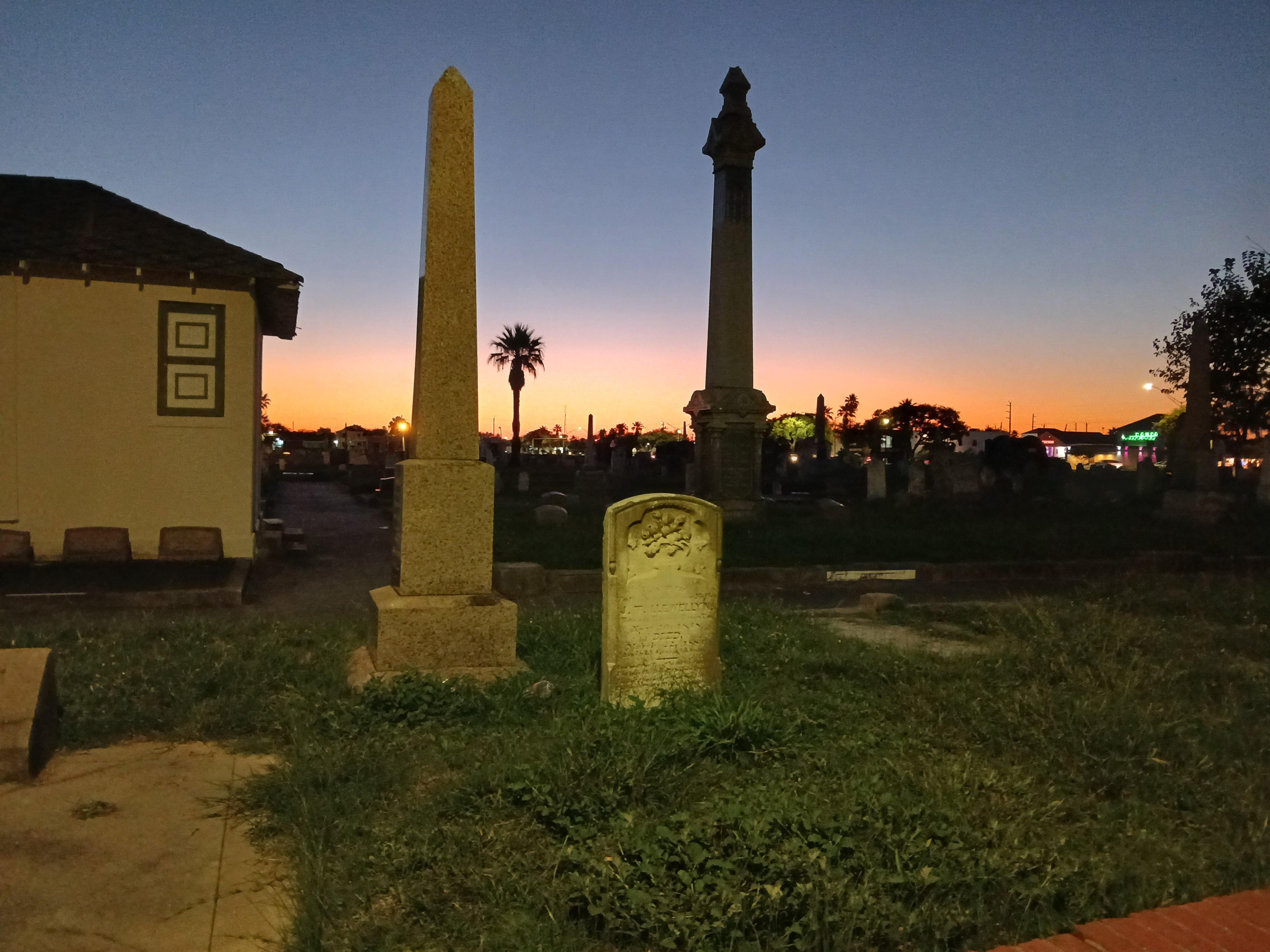
The city could not bury them. Bodies weighted and taken out to sea washed back on the tide within days, so the work turned to gathering and burning the dead where they were found, on the beaches and in the wreckage, for weeks afterwards. That single fact changes how the island reads. There is no cemetery holding the storm's victims and no wall of names of the kind Salem and Gettysburg have. The beach is the memorial, it is also where people sunbathe, and nothing marks it.
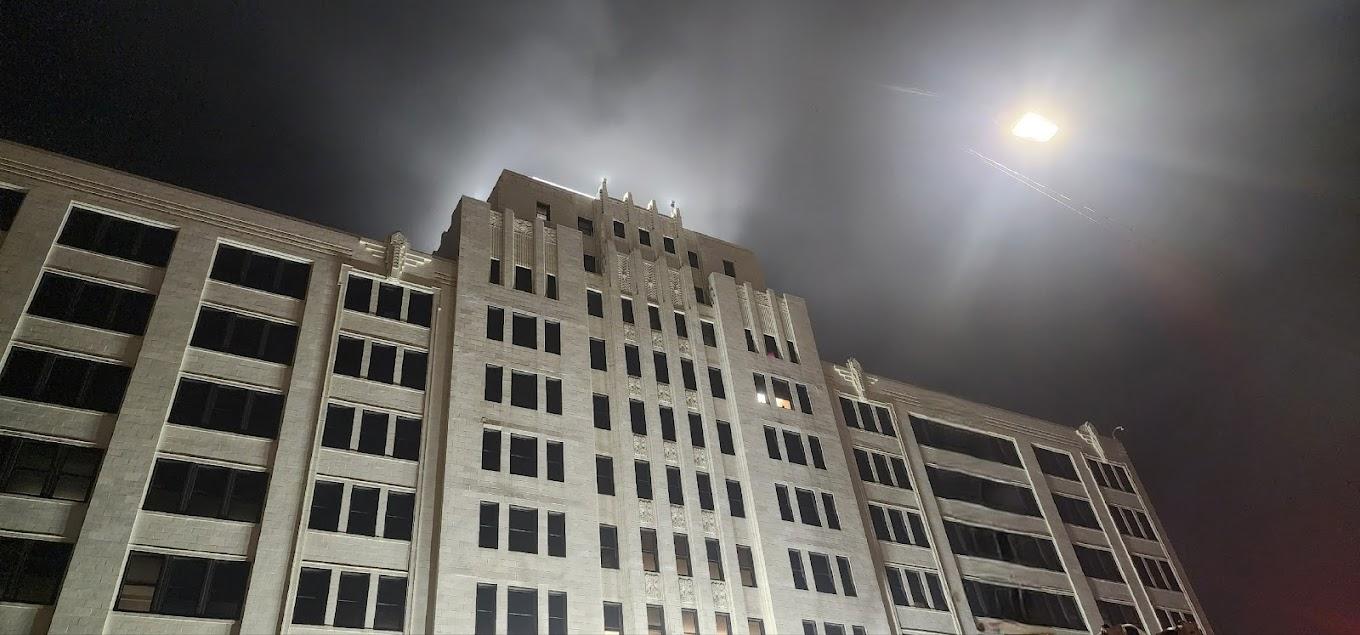
The seafront hotel opened in 1911 as the Hotel Galvez, eleven years after the storm and behind the new seawall - it was built to prove the island had a future. It trades now as the Grand Galvez after a restoration, and runs its own ghost tours. Its famous story is room 501 and a bride called Audra, said to have hanged herself in a turret on hearing her fiance's ship was lost. Treat it as folklore: no documented woman sits behind it, the details move between tellings, and the party telling it owns the building. The hotel is real and worth seeing. The bride is a story about the hotel.
Nicholas Clayton built it in stone and steel for the lawyer and railroad man Walter Gresham, and in 1900 it was one of the buildings that held - people sheltered inside it while the island came apart around them. It is a National Historic Landmark now, run by the Galveston Historical Foundation, open for a self-guided visit with deeper basement-to-attic tours on set dates. Of everything on the standard haunted-Galveston list, this is the one where a ticket buys you something the street cannot.
The seawall, the beach and the Strand cost nothing, and walking the Strand's iron-fronted blocks is most of what people come for. Bishop's Palace charges. The Grand Galvez lobby is open to anyone who walks in. So the honest case for a guided tour here is narrative rather than access: without someone telling you what happened on these streets, they look like a pleasant Gulf town, which is exactly the problem.
That sits in the typical band for the category, whose median is $30.
5 of the 5 Galveston tours we track . Ordered by review depth.
Typical for a ghost tour in Galveston · 5 tours, $29.99–$34.99, median $30
Typical for a ghost tour in Galveston · 5 tours, $29.99–$34.99, median $30
Typical for a ghost tour in Galveston · 5 tours, $29.99–$34.99, median $30
Below the for a ghost tour in Galveston · 5 tours, $29.99–$34.99, median $30

Above the for a ghost tour in Galveston · 5 tours, $29.99–$34.99, median $30